
A Summer Built Around the Interns
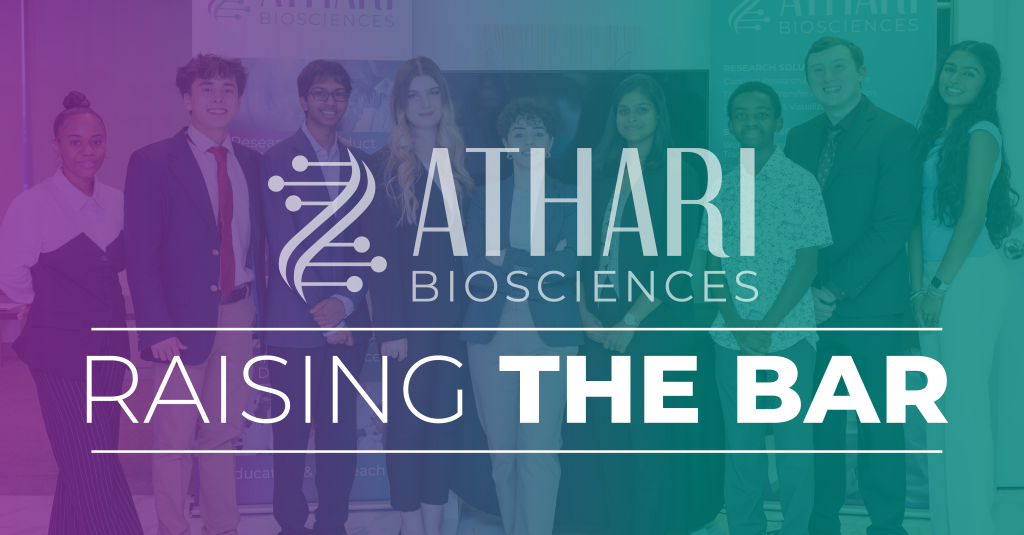
At Athari BioSciences, Inc. we designed our internship around a simple idea: make the students the center of gravity. This summer we hosted a cohort of nine interns whose experience levels ranged from high school and early academic training to advanced graduate study. Rather than slotting them into preset roles, we selected each intern from a competitive application pool and tailored the program to what they wanted to learn, the skills they wanted to leave with, and the exposure they needed to advance their career goals. That focus shaped every part of the experience. From week one, interns set personal learning objectives, matched with mentors, and built plans that tied daily work to clear outcomes. They did not spend the summer as extra hands on someone else’s project. They led their own. In practice that meant designing studies, defending methods, owning timelines, and being credited as the primary authors and principal drivers of their work.
The technical bar was high, and the work was real and inspiring. Projects were mapped to Athari Bio’s core mission and had direct paths to impact. Whether in assay development, data analysis, or translational applications, the expectation was that each intern would push beyond demonstration and toward a result that could inform our internal roadmaps or partner-facing deliverables. While our work is specialized, the program was intentionally interdisciplinary. Teams combined biology, engineering, computation, and design thinking to solve problems in more original ways.
Project Spotlights
- Microgravity muscle-atrophy gene therapy. Engineered a lentiviral construct to target gene expression in muscle atrophy pathways. The long-term concept explores a biosensor-driven therapeutic and eventual wearable integration amenable for long space flight missions.
- High-throughput antimicrobial screening with a cell viability assay. Created a fluorescence assay to evaluate gram-negative bacterial growth inhibitors and set the path to OT-2 robot automation.
- Targeted cancer cell death via HSV1-TK drug system. Engineered lentiviral vectors carrying HSV1-TK variants for targeted cancer death in tumor-targeting nanoparticles.
- Alphavirus-based pseudovirus assay for rapid antibody neutralization testing. Optimized plasmid production and VLP assembly for a Ha-CoV-2 system, targeting a reduction in readout time from 18 hours to roughly10 minutes using a faster reporter.
What made the program different was not only what the interns did but how we structured accountability and support. Athari Bio mentors acted as sounding boards and technical advisors while interns maintained ownership. Reviews focused on experimental logic, data quality, and decision-making under real constraints like time, cost, and feasibility. The result was a rare training environment where young, high-achieving people were treated as builders and thinkers who could ship work that matters. This is the internship model we believe the field needs: student-centered, outcomes-driven, technically rigorous, and interdisciplinary by design. It prepares emerging scientists and engineers to lead, not just contribute. It also raises the bar for what a summer at a biotech company can deliver for both the interns and the organization.
Beyond the bench: professional development that actually moves the needle
We wanted our interns to leave with more than technical skills. Throughout the summer we ran a focused series of seminars that answered two practical questions: what does a modern lab expect from you on day one? And what does the field expect from you in year five?
First, CLIA and CAP. We unpacked how accredited clinical labs operate, from quality management systems and documentation discipline to validation vs. verification, control plans, proficiency testing, and inspection readiness. The goal was simple: help students see what “ready for clinical” really means, and how to translate bench experiments into workflows that can withstand regulatory scrutiny. Second, professionalism. We treated communication, transparency, and code of conduct as technical skills. Finally, scientific communication. We covered how to write for impact, design figures that tell a clean story, and present data so decisions are obvious. Students built short talks that moved from hypothesis to result to next step, then field-tested them with live Q&A and peer critique.
Learning also happened outside the building. Our cohort spent a day at the Howard Hughes Medical Institute’s Janelia Research Campus, meeting scientists, seeing multidisciplinary teams in action, and getting a feel for how complex projects move from concept to tool. The conversations and lab walk-throughs gave students a clear picture of how their skills map to real research environments.
The program’s approach resonated beyond our walls. Loudoun Now profiled the internship and highlighted the way we put students in the driver’s seat, not on the sidelines. It captured what we hoped people would see in this work at Athari BioSciences: emerging scientists and engineers learning to lead, communicate, and deliver results that matter.
An Internship Model Where Emerging Scientists Lead
This internship cohort showed what can happen when you treat emerging scientists and engineers as leaders. They built real tools, generated real data, and practiced the habits that make work reproducible and decision ready. They also learned how to communicate results, operate within quality systems, and navigate professional environments with clarity and confidence. The payoff runs both ways. Our interns left with tangible outputs and a clearer line of sight to their next steps. Athari BioSciences gained new assays, sharper workflows, and a pipeline of leaders who know how to think across disciplines. We will carry these lessons into the next cohort, expanding what worked and raising the bar again.
If you are a student who wants this level of responsibility, or an educator or partner who wants to collaborate, keep an eye out for our next call for applications. To the mentors, staff, and especially the interns who made this summer exceptional, thank you. You set a new standard for what an internship can be.